Spain · Basque Country
San Sebastián
A crescent bay with more culinary stars per capita than almost anywhere.

In season · June · July · September
Swim in the Atlantic as though it were a lake. San Sebastián is built around a bay that has almost closed itself: two green headlands reach toward each other and an island sits in the gap between them, so the ocean arrives filtered, and the water inside the shell stays flat while the coast either side of the city takes the full weight of the swell. An Atlantic city with a calm bathing beach in the middle of it is an unusual object, and everything civic here — promenade, balustrade, bathing huts, the shape of the evening — is arranged around that accident of geology.
Sheltered water, and open water
The distinction that matters is which side of the headland you are standing on, not how many beaches the city counts. Inside the bay the sand runs as a long crescent, interrupted partway along by a low rocky promontory that gives the western stretch a name of its own, and the water in front of all of it is for floating — for old men swimming in September, for walking out at low tide. East of the river mouth the shore faces open Atlantic instead, and takes the surf, the wind and a younger crowd with it. Minutes apart on foot, and not the same holiday.
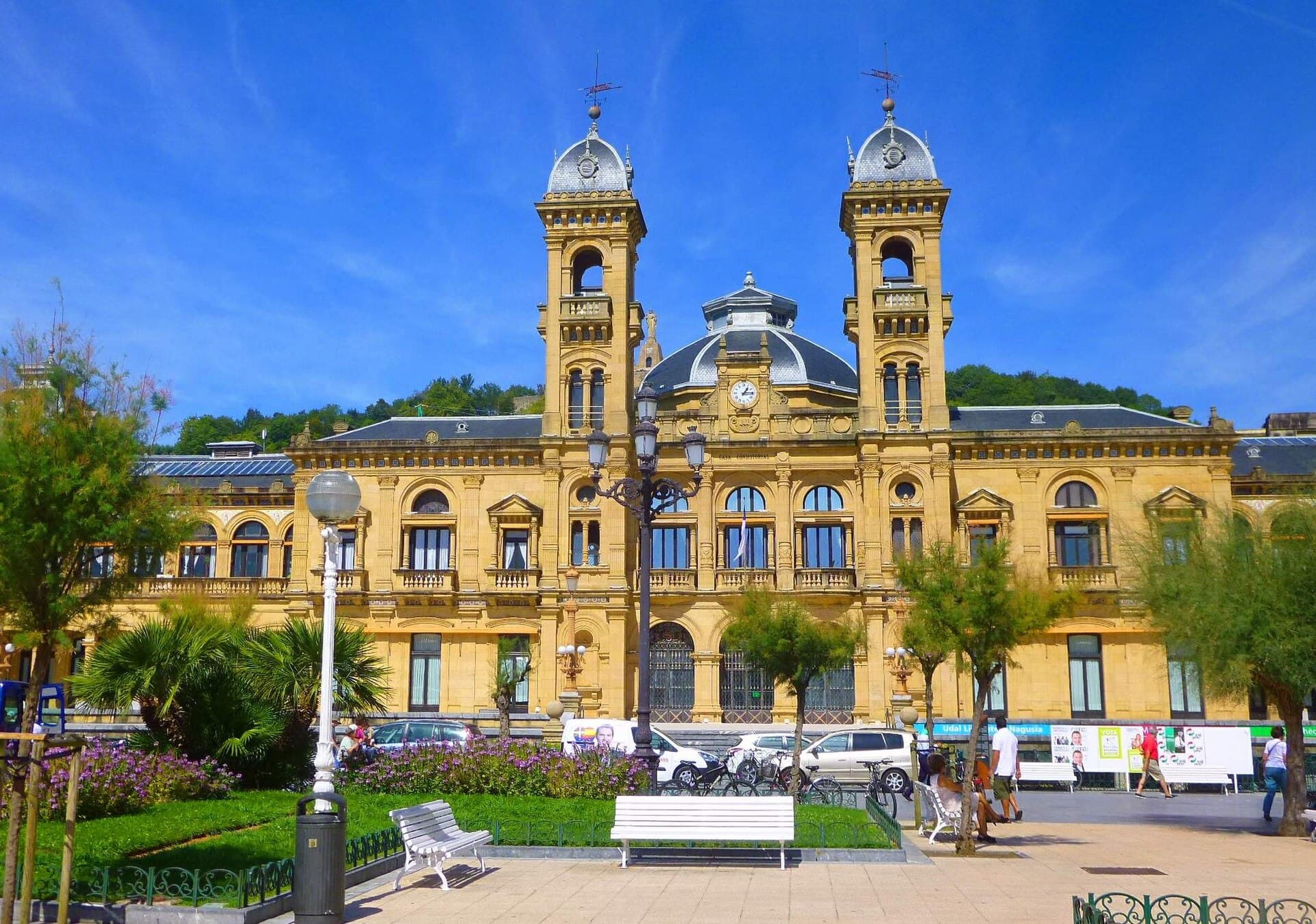
Behind the bay sits the old town, which is small, dense and given over almost entirely to eating. Behind that again is the nineteenth-century city built when the Spanish court took its summers here — wide streets, belle-époque bridges over the river, and a formality that the old quarter cheerfully ignores.
Eating is the itinerary, and it is done standing up
Dinner here has a format of its own. You eat at the bar, one or two things at a time, then leave and do it again somewhere else, working a loop of the old town on foot across an evening. Counters are laid out with the food in plain view, which removes the language problem entirely.
The city also carries a dense concentration of serious restaurants, several of them internationally known, and those want booking months rather than weeks ahead. Both halves are worth having: the bar crawl is what you will describe afterwards, the booked table what you will remember.
Two cautions. The old town on a Saturday night in season is shoulder to shoulder and the crawl stops being pleasant. And the Basque coast is green for the usual reason — it rains, in any month, and a summer week here can lose a day to it.
When to come
June, July and September are the honest months, and they are not interchangeable. June is warm, long-evening and comparatively quiet. July brings the city's full summer life and a jazz festival that takes over the bay. September is the best of the three for most travellers: the sea is still carrying the summer's heat, the crowds have gone back to work, and the international film festival gives the city a charged, dressed-up fortnight.
August is when Spain and France both arrive at once, together with the city's own great August festival week. Magnificent, and not a restful choice.
Whether it is expensive
Less than its reputation suggests, and in an unusual pattern. Eating well is cheap here by the standards of any comparable food city, because the standing-up format means you pay by the item and can stop whenever you like. A very good evening costs what a mediocre sit-down dinner costs in most of Europe.
The expensive parts are the room in high summer, and the handful of restaurants people travel here specifically for. Between those two poles the city is genuinely moderate, and a traveller who eats at the bar and books one serious table will spend far less than the destination's standing implies.
What is worth paying for
A room facing the bay, if the budget stretches — it changes the character of every morning. One booked table at a restaurant of real ambition. And the funicular up the western headland, which gives the view the city is photographed from.
Where to stay
The Aspirational Luxury Pick
A grand belle-époque house on the bay front or just behind it, with the promenade as your doorstep and a serious restaurant downstairs. These are the buildings the court era left behind, and they suit travellers who want the bay in the window and the old town within a fifteen-minute walk.
The Mid-Tier Value Premium Selection
A well-run hotel in the nineteenth-century grid between the river and the bay. You give up the sea view and keep everything else, including a shorter walk to the eating streets than most bay-front addresses manage.
The Smart Entry-Level Option
An apartment or small hotel in the neighbourhood behind the surf beach, across the river. Rates drop noticeably, the walk into the old town is over one bridge, and the quarter has its own bars that are not full of visitors.
San Sebastián at a glance
| Detail | San Sebastián |
|---|---|
| Country | Spain |
| Region | Basque Country |
| Character | Pintxos culture, a sheltered bay, belle-époque streets |
| Best months | June, July, September |
| Aspirational tier | Belle-époque house on or just behind the bay front |
| Mid-tier premium | Hotel in the nineteenth-century grid, no sea view |
| Entry-level | Apartment across the river behind the surf beach |
Rooms are the volatile part of the bill and the festivals move the market sharply, so comparing current stay and experience options for your exact dates is worth the effort.
In Frame · San Sebastián


The desk
Planning San Sebastián?
Tell us where, roughly when, and how many. A person reads every enquiry and answers from the address you give. Nothing is passed to an operator without your say-so.