Spain · Serra de Tramuntana, Balearic Islands
Deià
A stone village between the Tramuntana and the sea, beloved of poets.
In season · May · June · September · October
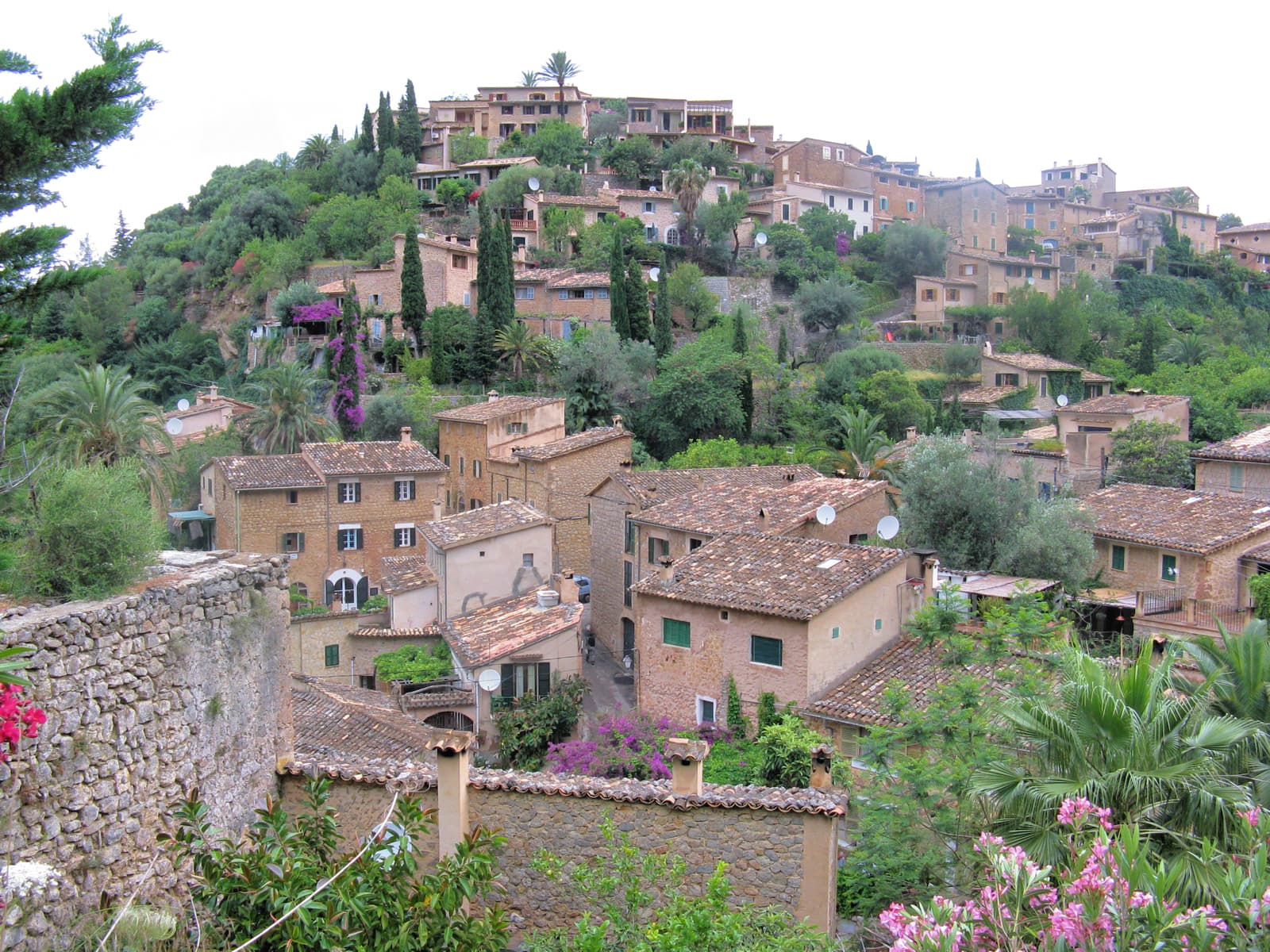
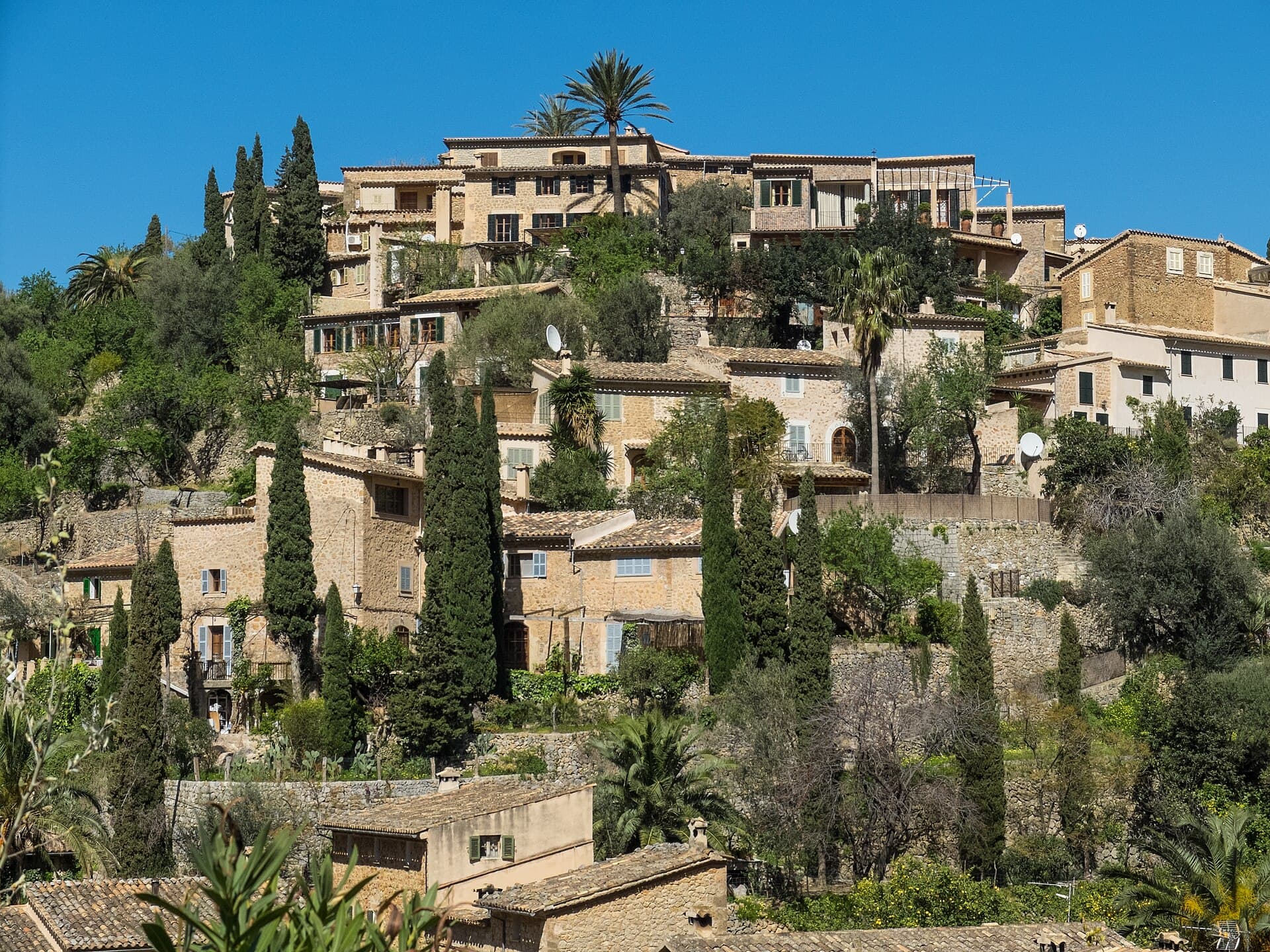
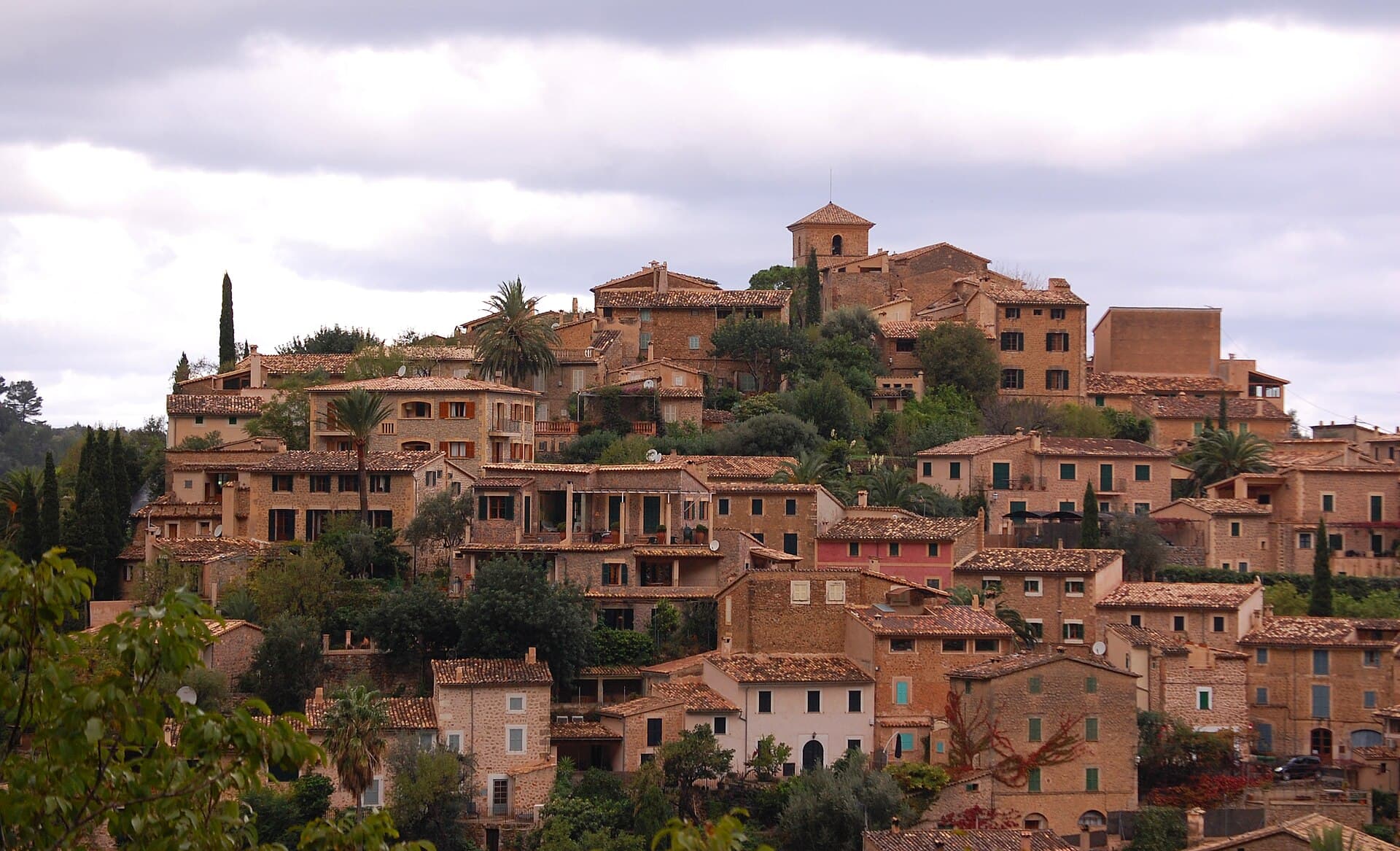
Deià looks at the sea from a height and has no easy way down to it. The village is stacked on a slope beneath the Teix, honey-coloured stone on terraces cut by hand into the mountain, and the water below sits at the foot of a ravine that takes a walk of real intent — or a slow, narrow drive — to reach. That gap between the view and the swim decides a great deal about a stay here. Visitors arrive for the coast and end up living at the pace of a mountain village.
Stays · Deià
Where to stay
Splurge
La Residencia, A Belmond Hotel, Mallorca
five-star manor-house hotel above the village
Two linked manor houses on the terraces above Deia, with olive groves, a sculpture garden and a shuttle down to the cove.
outdoor poolindoor poolspa and wellness centretennis courtgarden
Rates on request
Mid-range
Es Moli Hotel
four-star hillside hotel with terraced gardens
A hillside hotel on the Valldemossa road, with terraced gardens, a heated pool set into the slope and a tennis court. The village is a walk along the hill from the door.
outdoor poolheated poolgardenterracerestaurant
Rates on request
Good value
Hotel y Apartamentos Des Puig
four-star village hotel and apartments
A small hotel and a set of apartments in the village itself, with a saltwater pool and a terrace over the roofs. In a village with little at the lower end, it is a way in rather than a saving.
outdoor poolheated poolsaltwater poolgardenterrace
Rates on request
Search every stay in Deià with your datesCompare prices on Trip.com
Looking for a private house rather than a hotel? Tell the desk your dates and your party.
Booking links are affiliate links: if you book through one, we may earn a commission at no extra cost to you. Map data © OpenStreetMap contributors.
Experiences · Deià
Worth booking ahead

Private boat charter · Splurge
Half day private boat trip in Port de Soller
with Sail La Vie Soller
A private boat out of Port de Soller along the Tramuntana cliffs, with a skipper, snorkelling gear and a paddleboard aboard. The coast below Deia reads differently from the water than it does from the road.
Price on request

Private guided day · Mid-range
Palma de Mallorca Shore Excursion: Private Tour of Valldemossa, Soller and Serra de Tramuntana
A private car and guide for the Tramuntana road through Valldemossa and Soller, the route Deia sits on. It covers the day without anyone taking on the hairpins in a hire car.
5 hoursPrice on request

Guided day tour · Good value
VIP TOUR Mountains to Sea: Valldemossa, Deia & Puerto Soller
A shared day over the mountains through Valldemossa and Deia and down to Port de Soller. It covers the coast road without anyone having to drive it.
8 hoursFrom €90 a person · checked September 2026
Booking links are affiliate links: if you book through one, we may earn a commission at no extra cost to you. Prices are as checked on the date shown and vary with party size and season.
One road, and what it does to you
Mallorca's north-west coast is served by a single mountain road running the length of the Serra de Tramuntana, and Deià sits on it roughly halfway along. Arriving means driving that road. So does leaving, so does dinner in the next village, so does the run back to the airport. It is spectacular and slow — hairpin after hairpin above a drop — and through late winter and spring it carries a great deal of cycling, the range being one of Europe's favourite training grounds.
Two things follow. Parking in the village is genuinely scarce, so a hire car is a mixed blessing and somewhere to leave it is worth more than a balcony. And distance here is measured in minutes of concentration rather than in kilometres: Palma is under an hour away and feels a good deal further.
When to come
May, June, September and October. The Tramuntana holds its green well into early summer, and by late September the sea is still warm while the light has gone long and gold. July and August are hot, and a village this size feels every additional car.
Winter shuts a fair amount of it. Restaurants close, hotels take their break, and the walking is superb for anyone content to have the mountain to themselves.
Couples do best in the weeks either side of the peak. Evenings stay warm enough to eat outside, the terraces empty once the day visitors have driven back towards Palma, and the village returns to itself and whoever is staying in it.
Whether it is expensive
Yes, and scarcity rather than glamour is the reason. Deià is a protected village inside a protected landscape, which caps what can be built and keeps good rooms permanently in short supply. Nobody is adding a resort here, and demand arrives every summer regardless.
Cost then splits along a single line: whether you sleep in the village or near it. Inside, you are paying for the address, the stone and the view, and you walk to dinner. A few minutes along the road, in a farm estate or a house on a terrace, the same money buys considerably more space, and a car stops being optional. Eating divides the same way — village restaurants price like a small famous place, the market towns behind the mountain do not. Comparing current stay and experience options early matters here, because the inventory is small enough to sell out completely.
Where to stay
Splurge
A converted stone estate on the terraces above or below the village: an old finca with olives still working around it, a pool set into a level someone built by hand, the sea in the middle distance. Right for travellers who want the landscape to be the room's principal feature and do not intend to move much once they have arrived.
Mid-range
A small hotel, or a handful of rooms, inside the village itself — a stone house on one of the stepped lanes. Grounds are what you give up; what you gain is being in Deià in the evening, after the coaches have gone and the place belongs to itself again. Good for a first visit, and for anyone who would rather walk to dinner than drive to it.
Good value
A room or apartment in Sóller or Valldemossa, the villages either side, with Deià as a short drive. Both are larger, better supplied and cheaper, and one of them runs a wooden tram down to its port. You trade the address for the budget, and the coast road is the same in either direction.
What is worth the money
Walking comes first. The old routes between these villages predate the road and remain the honest way to read the terraces, built to farm a slope that had no soil until somebody put it there. The cove below the village, earned on foot. A day on the water, because this coast looks like a different place from beneath the cliffs. And the literary side, which is not invented: the churchyard on the hill holds the grave of the English poet who settled here in the twenties and stayed for the rest of his life, and the house he lived in is open to visitors.
At a glance
| Detail | Deià |
|---|---|
| Country | Spain |
| Region | Serra de Tramuntana, Balearic Islands |
| Character | Stone village, artist heritage, mountain-to-sea terraces |
| Best months | May, June, September, October |
| Aspirational tier | Converted stone finca on the terraces, pool, sea in the middle distance |
| Mid-tier premium | Small hotel in the village lanes, dinner on foot |
| Entry-level | Room in Sóller or Valldemossa, Deià by car |
In Frame · Deià

Before you go
Enquire
Planning Deià?
Tell us roughly when and how many of you, and we will reply by email. We only pass your details to an operator if you ask us to.