Italy · Lazio
Rome
Twenty-eight centuries of practice at the good life.

In season · April · May · October
One of the city's most-walked squares is the shape it is because a stadium stood there. Romans raced on that ground; the seating decayed; houses went up on its foundations and followed the curve; and the long oval outlasted every one of those changes, so an evening crowd circling it is tracing a track laid out for athletes. None of that counts as a curiosity here. It is the ordinary condition of the place.
Stays · Rome
Where to stay

Splurge
Orient Express La Minerva
five-star hotel
A five-star house on a small square directly behind the Pantheon, with a spa and a terrace over the old centre. The scarce thing in Rome is position, and this has it.
spa and wellness centrefitness centreterraceconcierge servicesoundproofed rooms
Rates on request
Mid-range
Grand Hotel Plaza
five-star hotel
A grand old hotel on the Corso, with a sun terrace above the traffic and public rooms that have kept their character rather than been modernised out of it. The mid-range pick in a centre where the ceiling is five-star throughout.
sun terracerestaurantbarfitness centreconcierge service
Rates on request
Good value
Assunta Domus
central rooms, no official star rating at source
Air-conditioned rooms on a lane between Piazza Navona and the Pantheon, with a lift, a concierge desk and an early check-in option. No pool, no terrace and no view; what it buys is the old centre on foot from the door.
air conditioningliftconcierge serviceexpress check-infamily rooms
Rates on request
Search every stay in Rome with your datesCompare prices on Trip.com
Looking for a private house rather than a hotel? Tell the desk your dates and your party.
Booking links are affiliate links: if you book through one, we may earn a commission at no extra cost to you. Map data © OpenStreetMap contributors.
Experiences · Rome
Worth booking ahead

Private guided tour · Splurge
Jewish Ghetto and Great Synagogue of Rome Walking Tour with Local Expert Guide
with ItalyBesTours
A private walk through the old Jewish quarter with a licensed guide, past the ruins of the Theatre of Marcellus and the Portico of Octavia and the fountain of the turtles, and inside the Great Synagogue and its museum. An affecting corner of the centre.
3 hoursPrice on request

Walking tour · Mid-range
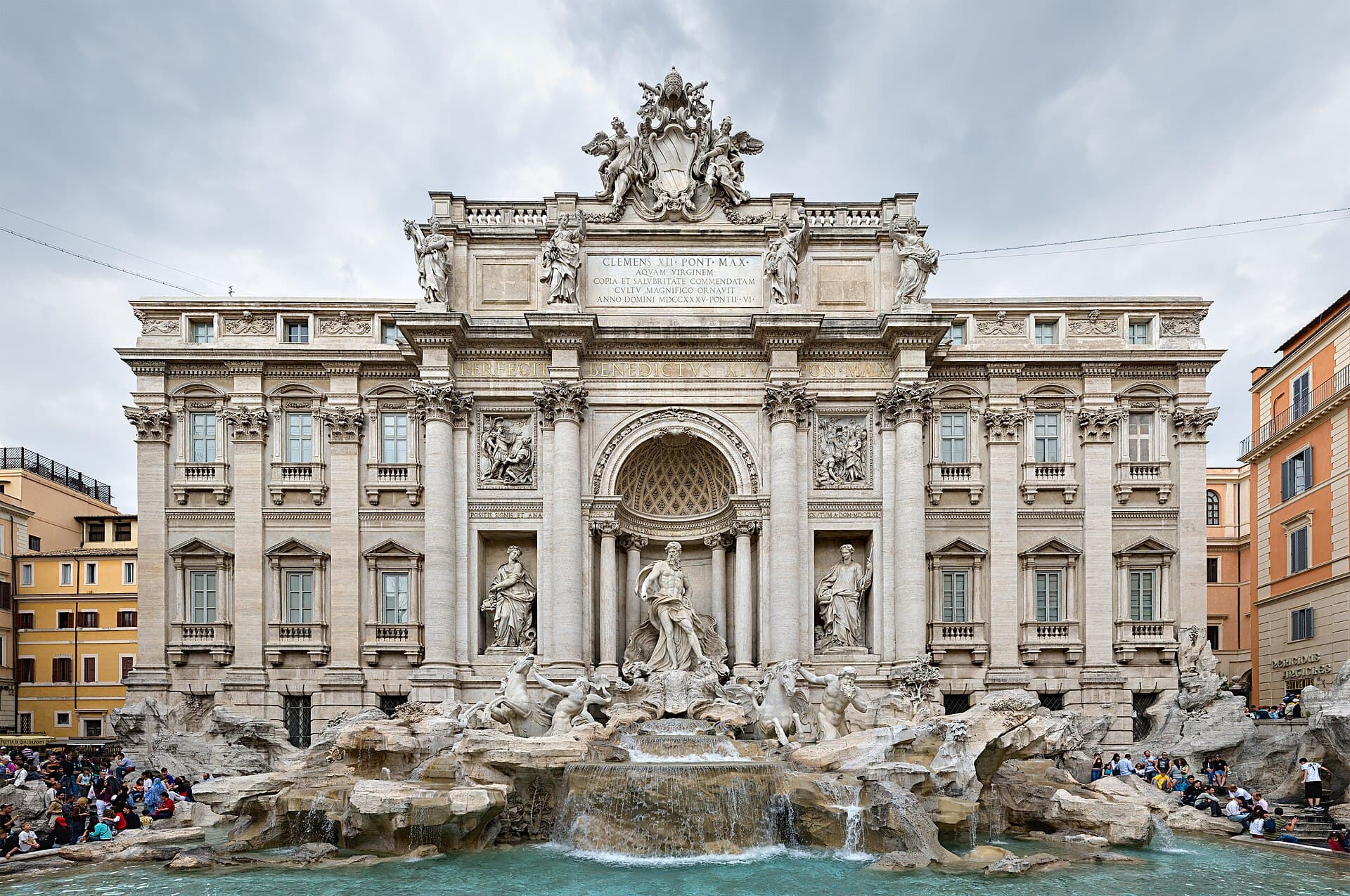
Rome Max 6 People Walking Tour: Pantheon, Trevi Fountain, Gelato
A walk between the Pantheon, the Trevi Fountain and the piazzas around them, capped at a very small group so the guide can actually be heard. Gelato is included, which in this city is not a throwaway.
2 hoursFrom €129 a person · checked September 2026

Street food tour · Good value
Rome Street Food Tour with Local Guide
A guided eating walk through the centre's counters and markets, run in a small group. An inexpensive introduction to how Romans actually eat, as opposed to how visitors are fed.
2.5 hoursFrom €47 a person · checked September 2026

Guided museum visit · Splurge
Guided Visit Vatican Museums, Sistine Chapel, and Saint Peter's Basilica
A guide takes the Vatican Museums, the Sistine Chapel and Saint Peter's Basilica as one sequence rather than three separate visits, so the route between them is decided in advance. It is the most expensive of the tickets held for Rome.
From €55 a person · checked September 2026

Museum entry · Mid-range
Colosseum, Palatine Museum and Roman Forum Combo Ticket
One ticket covering the Colosseum, the Palatine Museum and the Roman Forum, valid for twenty-four hours with an audioguide included. The three sites adjoin one another, so the window is long enough to split the visit across a morning and a late afternoon.
From €22 a person · checked September 2026

Museum entry · Good value
Borghese Gallery
Timed entry to the Galleria Borghese, the Bernini and Caravaggio collection held in the villa at the top of its own gardens. At nine euro it is the cheapest ticket held for Rome and the smallest building of the three.
From €9 a person · checked September 2026
Booking links are affiliate links: if you book through one, we may earn a commission at no extra cost to you. Prices are as checked on the date shown and vary with party size and season.
A city built on its own rubble
Ground level in the centre has risen over the centuries — floods, fires, demolition, and the Roman habit of levelling a ruin and building straight on top of it. Antiquity, as a practical matter, is downstairs. You go down to reach it: into excavated forums below the modern pavement, into crypts beneath churches, and in one celebrated case through a medieval basilica into an earlier church and then into a Roman lane with water still running along it.
Reuse did the rest of the preserving. An ancient temple survives intact because it was converted into a church early and never abandoned, and columns quarried from imperial ruins hold up half the basilicas in the city. Fountains still run partly on channels laid in antiquity, which is why cast-iron street taps across the centre pour drinkable water all day.
Not everything survived by accumulation. The twentieth century drove a wide ceremonial avenue through a dense inhabited quarter beside the imperial forums, and cleared another approach across the river; both scars are legible once you know to look.
When to come
April, May and October are the city's months. Roman summers are hot in a way that shuts down the middle of the day, and the stone holds that heat well past sunset. Spring brings long light, wisteria over courtyard walls and heavy queues. October brings warm afternoons, cool mornings and a city that has gone back to work.
August deserves its own warning: heat peaks, and a real share of the neighbourhood restaurants close for the mid-month holiday, leaving the centre to visitors. Couples should get up early at least once — Rome before eight belongs to residents and delivery vans, and the famous squares are briefly empty enough to see properly.
Getting about
Walk. The historic centre is compact and the pleasure lies in what you pass rather than what you arrive at. The metro will carry you to the Colosseum and to the Vatican, but it misses the historic-centre core almost entirely, for the excellent reason that digging in Rome hits archaeology and stops for years. Buses and trams fill the gaps, cobbles punish the wrong shoes, and taxis are best taken from a rank.
Whether it is expensive
Rome is inexpensive for everything except the bed. Eating well is cheap once you walk away from the sights; the great churches charge nothing; the fountains and the piazzas charge nothing.
Accommodation is where the money goes, priced almost entirely on distance from the centre. A room inside the historic core commands a serious premium, and it is worth understanding rather than dismissing: staying centrally means going back through the worst of the afternoon and coming out again at nine, which is how Romans use their own city. Between that and the outskirts sit the residential quarters a tram ride from the middle, and they are good value. Rates move sharply with the religious calendar and the shoulder-season rush, so comparing current stay and experience options across your dates is worth an hour before anything is booked.
What is worth paying for
The first entry slot of the day at the major sites, every time. Whatever it costs to be inside the great collections before the tour groups arrive, pay it.
Beyond that: a room inside the walls, for the reason above; and one long lunch in a working food quarter, where the cooking runs on offal, pasta and sheep's cheese rather than on anything invented for visitors.
Where to stay
Splurge
A palazzo conversion or grand hotel in the historic centre, with a roof terrace over the domes and rooms carved out of spaces built for entirely other purposes. These places sell the address and the terrace. They suit travellers who want to walk out of the door into the city at eleven at night.
Mid-range
A small hotel or apartment in one of the older quarters just off the tourist spine, with a lift, a decent breakfast and a handful of rooms. You keep the walkable centre and lose the terrace and the ceremony. Ideal for couples out from morning until very late.
Good value
A guesthouse or apartment in a residential neighbourhood a tram or bus ride from the middle, with a market, a bakery and a bar of its own. You trade twenty minutes each way for more room and a version of Rome that has not been curated.
Rome at a glance
| Detail | Rome |
|---|---|
| Country | Italy |
| Region | Lazio |
| Character | Eternal-city grandeur, trattoria lanes, baroque piazzas |
| Best months | April, May, October |
| Aspirational tier | Palazzo conversion in the historic centre with a roof terrace |
| Mid-tier premium | Small hotel or apartment in an older quarter off the spine |
| Entry-level | Guesthouse or apartment in a residential quarter a tram ride out |
In Frame · Rome


Before you go
Enquire
Planning Rome?
Tell us roughly when and how many of you, and we will reply by email. We only pass your details to an operator if you ask us to.