France · Île-de-France
Paris
The capital of wanting things beautifully made.

In season · April · May · June · September · October
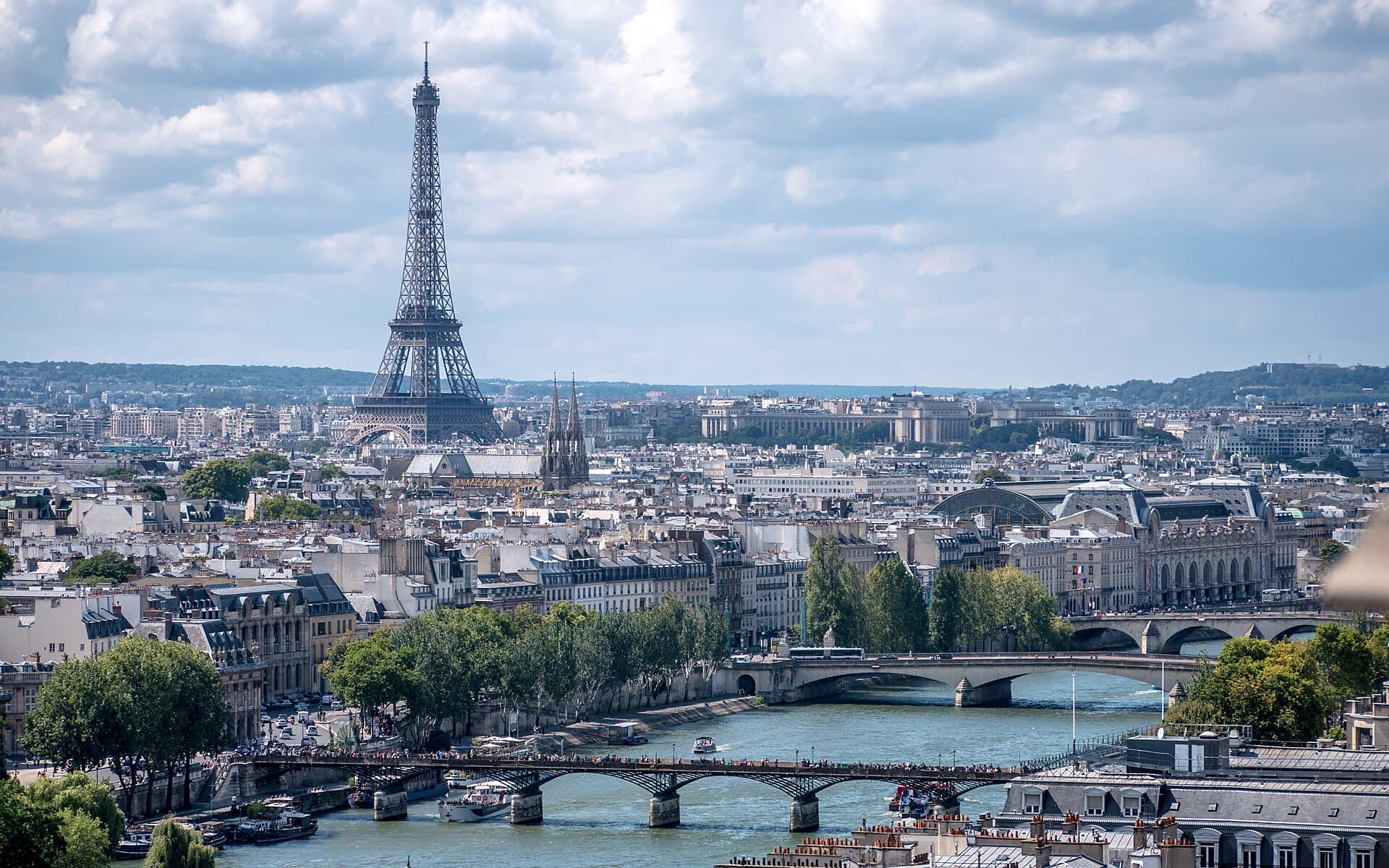
Quarry the stone, then build the city on the hole. Paris is made from its own subsoil — a pale limestone cut out from beneath the Left Bank and stacked back up as façades — so the colour of the streets and the voids underneath them are one fact seen from two directions. That helps explain why a capital this size is so nearly a single colour.
Stays · Paris
Where to stay

Splurge
The Peninsula Paris
five-star hotel
A grand house on a wide avenue between the Arc de Triomphe and the river, with a spa carrying a hammam and a steam room, a heated indoor pool, and a roof terrace over the city. Position is most of what it sells: much of the western centre is walkable from the door.
spa and wellness centrehammamsteam roomsaunaheated indoor pool
Rates on request
Mid-range
Hotel La Villa Saint Germain Des Prés
five-star hotel
A five-star house on a quiet Saint-Germain street a short walk from the river, with a heated indoor pool, a sauna and a spa. Saint-Germain as an address without the palace-hotel bill, and the left-bank galleries at the end of the road.
heated indoor poolspa and wellness centresaunamassagefitness centre
Rates on request
Good value
Hôtel Albe Saint Michel
three-star hotel
A plain, soundproofed, air-conditioned hotel on a narrow Latin Quarter lane, a few steps from the river and the island. No view and no spa; what it buys is a central address and a bed you can sleep in.
air conditioningsoundproofed roomsconcierge serviceexpress check-inbreakfast in the room
Rates on request
Search every stay in Paris with your datesCompare prices on Trip.com
Looking for a private house rather than a hotel? Tell the desk your dates and your party.
Booking links are affiliate links: if you book through one, we may earn a commission at no extra cost to you. Map data © OpenStreetMap contributors.
Experiences · Paris
Worth booking ahead

Private Seine charter · Splurge
Top Private Cruises in Paris with French Champagne and surprises
with Visite Paris En Bateau
A boat on the Seine held for your party alone, with champagne aboard, running past the small Statue of Liberty, the Eiffel Tower and Notre-Dame before turning back. The city read from the water, at your own pace rather than a timetable's.
1.5 hoursFrom €399 for the group · checked September 2026

Day trip · Mid-range
Loire Valley Wine and Castles Small-Group Day Trip from Paris
A small-group day out of the city to the Loire, taking in châteaux and a tasting of the valley's wines with the driving done for you. An excursion that gets you properly out of Paris and back inside a day.
12 hoursFrom €245 a person · checked September 2026

Street food tour · Good value
Paris Le Marais Food Tour With 10+ Tastings, Cheese, Wine & More
A walk through the Marais with stops for cheese, charcuterie, pastry and wine, run in a small group. A useful, inexpensive afternoon: you learn the streets and eat properly at the same time.
From €89 a person · checked September 2026
Booking links are affiliate links: if you book through one, we may earn a commission at no extra cost to you. Prices are as checked on the date shown and vary with party size and season.
One colour, by rule
Stone alone would not have done it. Paris looks the way it does because the nineteenth-century rebuilding under Haussmann arrived with a rulebook: façade heights fixed in relation to street width, cornice lines carried across whole blocks, balconies required to align so that they run in continuous bands, roofs pitched and covered in grey zinc. Individual buildings surrendered the right to be interesting and the street gained the right to be beautiful.
That trade is still enforced, which is why the centre has stayed coherent. It also explains the Parisian obsession with interiors. When the outside is settled by regulation, everything expressive moves indoors: the workshops, the couture houses, the restaurants with eight tables, the hotels that look like nothing at all from the pavement.
When to come
April, May, June, September and October are the honest months, and they divide by temperament. Spring is the pretty one — chestnuts out, terraces reopening, the parks suddenly full — and the busier of the two shoulders. Autumn brings warm light, shorter queues and a cultural season starting rather than winding down.
August remains the great Parisian anomaly. Much of the city takes its holiday at once, and while the closures are less absolute than they were, a noticeable share of the small places simply shut for weeks. What is left is quieter, hotter and less itself.
Couples do well in the evenings, when the city stops performing for visitors. Several of the major museums hold one late opening a week, and a great collection at nine at night, half empty, is a different proposition from the same collection at eleven in the morning.
Getting about
Walking is the point, and the métro exists to reset you when the walking has gone too far. Distance is not what costs you here: a train across town takes minutes. Which quarter you sleep in matters far more, because the character changes street by street and your mornings and late evenings will happen within a few hundred metres of the door.
Whether it is expensive
The room is the expense. Paris eats, drinks and travels cheaply when you want it to — a counter lunch, a glass taken standing at the bar, a museum ticket, a métro fare — then asks extraordinary sums for square metres in the middle. Everything else is optional. The address is not.
At the very top, France operates a formal state distinction above five stars, and a small number of the city's houses hold it. Below that the drop is steep and the value improves quickly: a small independent hotel in a good quarter, with a lift the size of a phone box and a genuinely useful concierge, delivers most of the experience for a different order of money. Rooms run small at every tier, because this is a nineteenth-century city and its buildings were not designed around beds. Since rates swing wildly with the trade-fair and fashion calendar, comparing current stay and experience options across your exact dates is worth doing.
What is worth paying for
Location before size, every time. A small room in a quarter you want to walk out into beats a large one beside a ring road, and in a city organised around strolling that is not a close call.
After that: one properly serious meal, booked well ahead; a late museum evening; and, if the budget stretches, a room facing something — a courtyard garden, a run of zinc roofs and chimney pots, the river.
Where to stay
Splurge
A grand hotel in the central quarters, palace-tier or just below, with a serious restaurant, a spa downstairs and rooms scaled like apartments. These are institutions as much as hotels. They suit travellers who intend to use the building rather than sleep in it.
Mid-range
A small independent hotel of thirty-odd rooms in a good quarter, design-led, with a courtyard or a bar of its own. You give up the spa and the ceremony, keep the location, and often gain staff who behave like neighbours. Well suited to couples out from morning until late.
Good value
An apartment or simple hotel a little further out along a good métro line, in a residential quarter with its own market street. You trade the postcard address for more space and a neighbourhood that is not performing, and the trains make the difference in minutes rather than hours.
Paris at a glance
| Detail | Paris |
|---|---|
| Country | France |
| Region | Île-de-France |
| Character | Haute couture, grand hotels, museum evenings |
| Best months | April, May, June, September, October |
| Aspirational tier | Grand central hotel with a serious restaurant and large rooms |
| Mid-tier premium | Small independent design hotel in a good quarter |
| Entry-level | Apartment or simple hotel further out on a good métro line |
In Frame · Paris


Before you go
Planning Paris
Enquire
Planning Paris?
Tell us roughly when and how many of you, and we will reply by email. We only pass your details to an operator if you ask us to.